
Fix Your Tech Neck: A Physical Therapist's Guide to Reclaiming Your Posture
- Regan

- Jan 17
- 3 min read
Updated: Mar 14
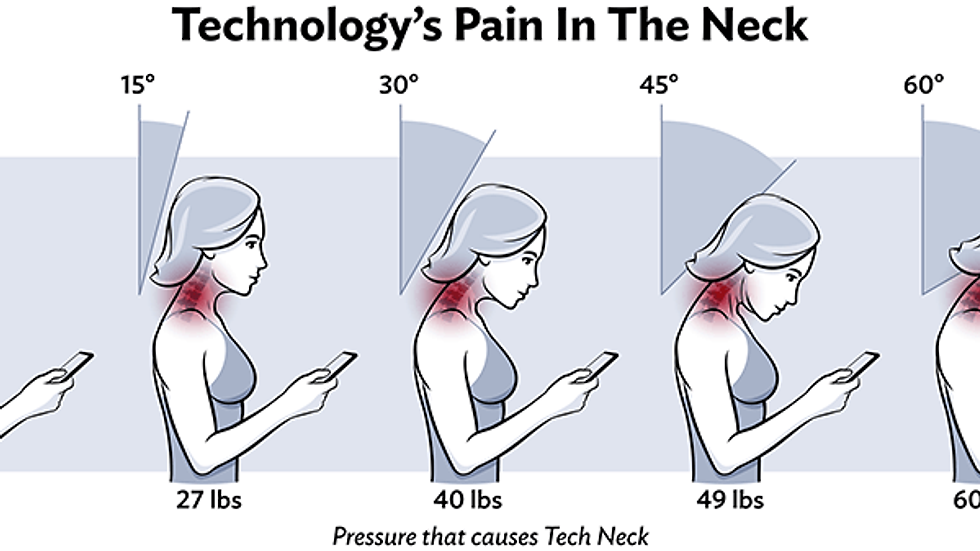
If you work at a desk, whether from home or in an office, chances are you spend a large portion of your day in a forward-flexed posture. Your low back rounds, your thoracic spine (mid-back) curves forward, and your head drifts toward the screen in front of you. Add in frequent phone use, and this position becomes even more pronounced.
This posture pattern is commonly referred to as “tech neck,” and it has become increasingly prevalent in modern society. Research suggests that up to 60–70% of adults experience neck pain at some point in their lives, with prolonged screen and device use being a major contributing factor. In physical therapy clinics, neck and upper back discomfort related to posture is now one of the most common complaints we see.

The Good News
Fixing tech neck does not mean changing careers, throwing out your laptop, or swearing off your phone forever.
What does matter is learning how to reverse the postures we live in daily and prioritizing movements that bring your body back into spinal extension.
Why Tech Neck Happens
Tech neck isn’t just about your head bending forward. It’s a full-spine issue.
Most people fall into a flexed posture because of:
Tightness in the front of the body (chest, neck flexors)
Weakness and under-recruitment in the back of the body
Over time, this imbalance pulls your head forward, places extra stress on the cervical spine, and forces your muscles to work overtime just to keep your head upright.
The Key Muscles We Want to Target
To correct tech neck, physical therapy focuses on restoring balance and support through several muscle groups:
Erector spinae – provide support and stability for the vertebrae
Deep neck extensors – help position the head properly over the spine
Postural support muscles, including:
- Rhomboids
- Trapezius
- Latissimus dorsi
These muscles work together to support spinal extension, open the chest, and reduce strain on the neck.

Step 1: Retrain True Neck Extension
The first step is learning how to extend the neck correctly in daily life.
This does not mean simply tipping your head backward.
Instead, think about:
Gently shifting your head straight back, bringing its center of gravity over your spine
Keeping your eyes level and chin slightly tucked
Many people feel a deep stretch in the small muscles of the neck when they do this correctly, and it can feel surprisingly tiring at first. That’s normal. These deep stabilizers often haven’t been asked to work in a long time.
Practicing this movement regularly, especially during screen time, is one of the most effective ways to reduce tech neck strain.

Step 2: Improve Thoracic Mobility and Extension
Your neck can’t fully relax if your mid-back stays stiff and rounded.
Focusing on thoracic spine mobility and extension helps:
Take pressure off the cervical spine
Improve overall posture
Allow your head and shoulders to sit in a more natural position
Movements that encourage gentle extension through the upper back are key, especially if you spend long hours sitting.

Step 3: Strengthen the Backside of the Body
Finally, we want to build strength in the muscles that hold you upright.
Strengthening the posterior chain helps:
Open the chest
Support proper head positioning
Maintain better posture without constant effort
When these muscles are strong, good posture becomes more automatic instead of something you have to consciously “hold.”

The Bottom Line
Tech neck develops because our bodies adapt to how we use them most often. We live in flexion, so our muscles adapt to flexion.
By:
Reintroducing spinal extension
Improving thoracic mobility
Strengthening the muscles along the back of the body
You can rebalance tightness in the front and weakness in the back, improve posture, and significantly reduce neck and upper back pain.
Tech neck is common, but it doesn’t have to be permanent. With the right movement strategies, your body can learn a better way to support itself, even in a screen-filled world.
Additional Tips for Managing Tech Neck
Ergonomics Matter
Consider your workspace setup. Is your screen at eye level? Are you using a chair that supports your lower back? Small adjustments can make a big difference.
Take Breaks
Set a timer to remind yourself to take breaks. Stand up, stretch, and move around every hour. Your body will thank you!
Stay Hydrated
Drinking enough water is crucial for muscle function. Dehydration can lead to muscle cramps and tension.
Mindfulness and Relaxation Techniques
Incorporate mindfulness practices like deep breathing or meditation. These can help reduce stress and tension in your body.

By following these strategies, you can take control of your posture and alleviate the discomfort associated with tech neck. Remember, it’s all about balance and awareness. You’ve got this!


Comments